Shoes off: Buddhist etiquette and facts for novices
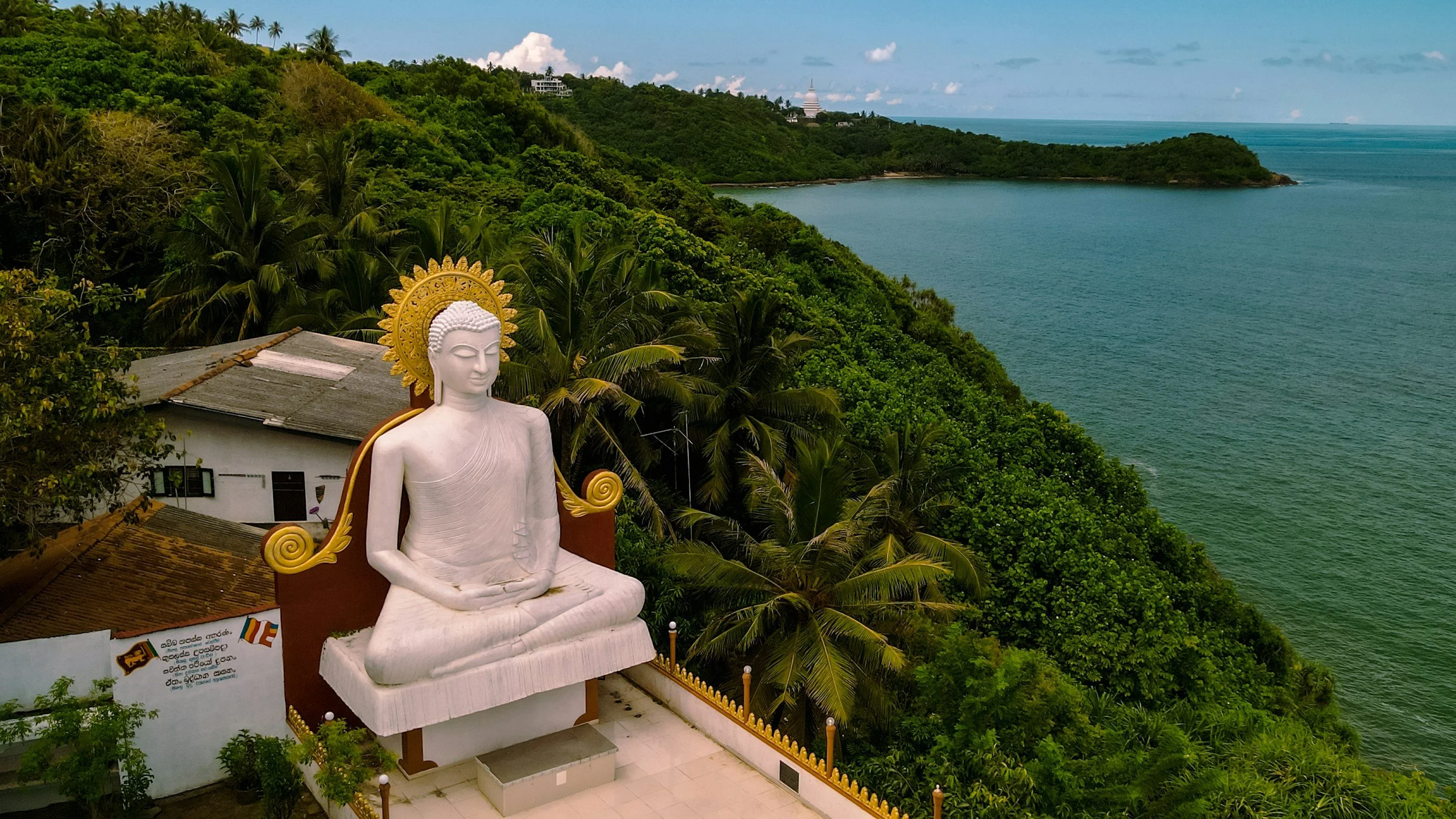
Sri Lanka counts thousands of temples on its territory. At least 6,000 have been recorded, and many more are believed to be hidden in the jungle. 70% of the population in Sri Lanka is Buddhist, about 15 million citizens. Buddhism is intrinsic and present in everyday life. It is a way of life and a form of worship worth observing, as every action is taken according to the principles of Buddhism. The country has a Ministry of Buddhism, and upon election, the president must pay their respects to the relic believed to have belonged to the Buddha: the Sacred Tooth. This means that no elected Sri Lankan president can be anything but Buddhist.
Buddhism in Sri Lanka differs a bit from all others in the world. As the last Buddha, Siddhartha Gautama, was a Hindu before his devotion to Buddhism and enlightenment, Sri Lankan Buddhists also worship Hindu gods. They see them as protectors of Buddhism. The proximity to India also favoured this type of worship for centuries. Let’s not forget, too, that King Ashoka, who was a Hindu, converted to Buddhism and sent his children to spread Buddhism across Asia. His daughter went to Sri Lanka and spread Buddhism there by planting a sapling of the original and sacred Bodhi tree under which the Buddha reached Nirvana.
My husband and his family are Buddhists, so I know first-hand how important Buddhism is to them. The first time I went to Sri Lanka, I was taken to the local temples, the town counts a dozen of them. I have been to other Buddhist temples elsewhere in the world, but none had all the rules that temples in Sri Lanka apply and that you must abide by as a visitor. These rules are spoken and taught by parents to children from a very young age. As a foreigner, except for modesty, I had no idea what was expected of me at the temple. So, on your next trip to the Pearl of the Indian Ocean, this unofficial guide should help you navigate the thousands of years of traditions and rules each temple holds.
Dress modestly
This means: nothing above the knee for women AND men. Shirt on, buttons up, shoulders covered, not too much cleavage, hats off.
Locals will tell you what is appropriate or not and help you dress if needed. For the top part, there is nothing that a shawl cannot help with, which is why I advise you to always have one with you.
Sri Lanka is very hot and humid. Temples tend to be open 24/7. Some close in the evening, mainly because there are valuables within the premises. So I recommend visiting them at sunset. It also has a magical vibe with the lights on.
SHOES OFF
Most temples in Sri Lanka are outdoors. Sometimes, they are laid out as small pavilions spread across the land, but mostly it is outdoors. So shoes off means barefoot. That includes your socks too, yes.
Shoes and socks have to be left at the entrance of the temple premises, not when entering a building. You will have to walk around the grounds barefoot. That ground is either made of sand, rock, or cobblestones. Go during the day and your feet will feel the burn. You can leave your shoes at the entrance without worry. There is always an elder watching.
Welcome Vishnu
Before entering the main area, it is always recommended to pay respects to Vishnu. In some mythologies, the last Buddha was said to have been the ninth avatar of the Trimurti God. Now he is considered the protector of Buddhism. It is always appreciated to pay your respects to him too.
Don’t come empty-handed
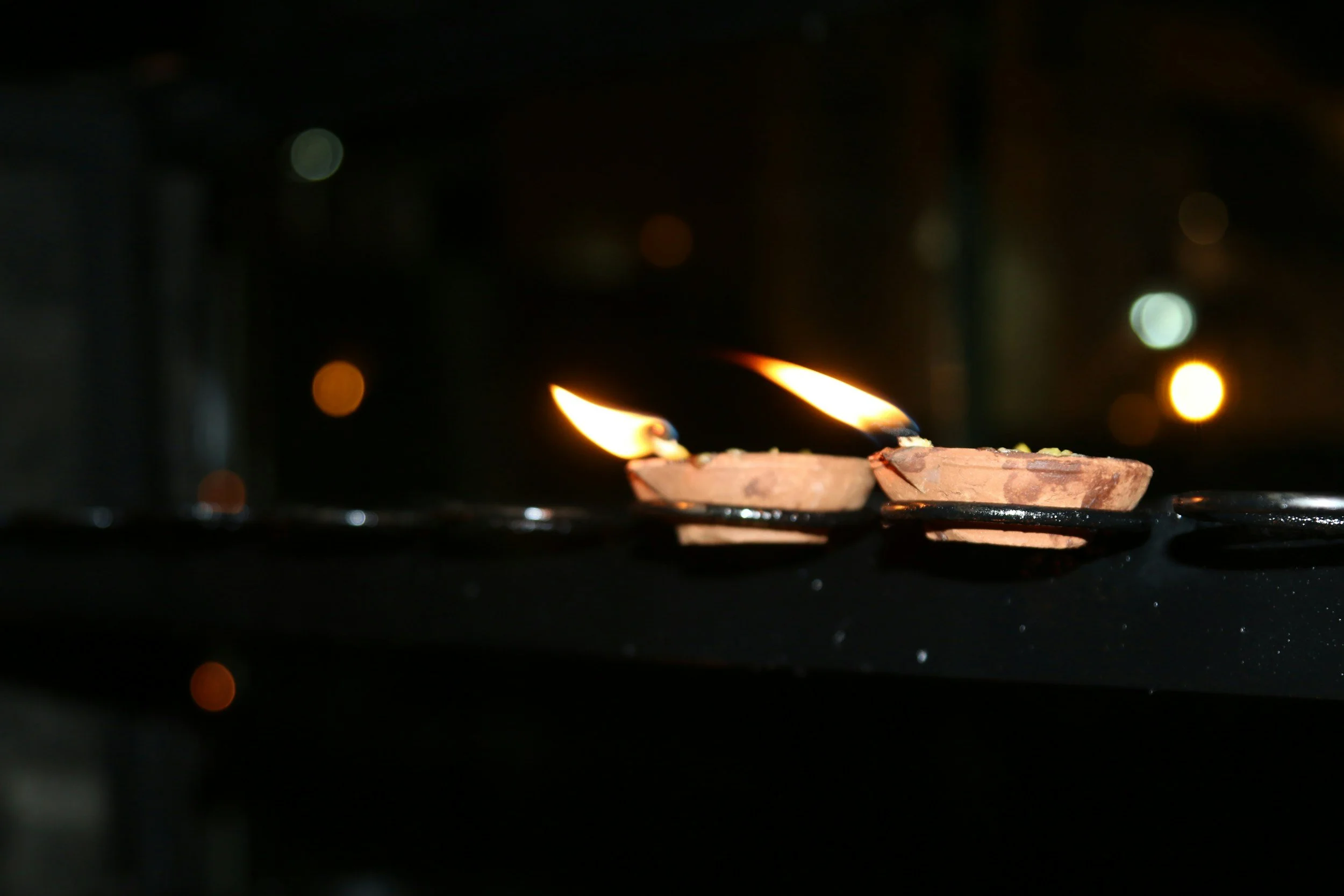
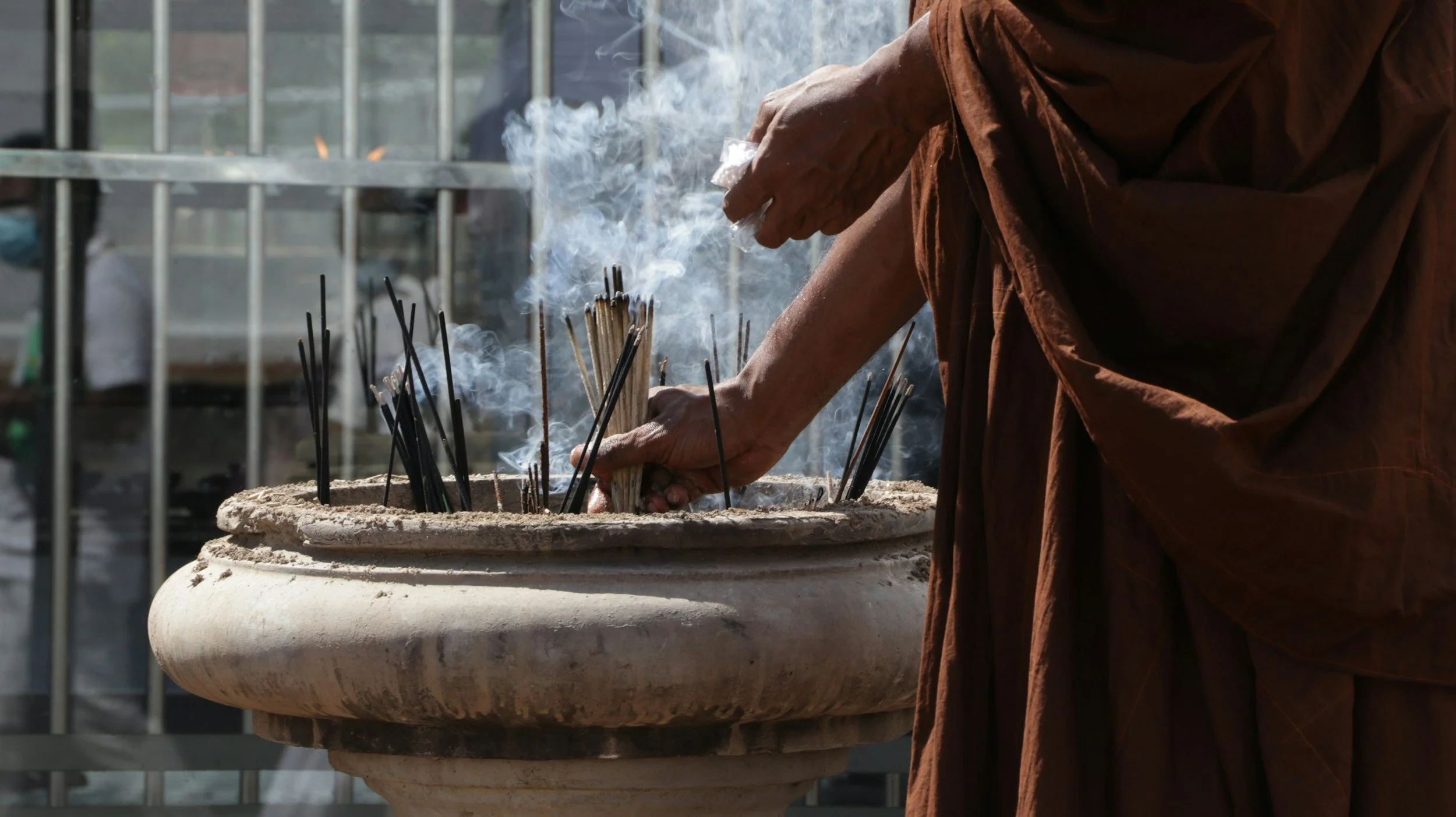
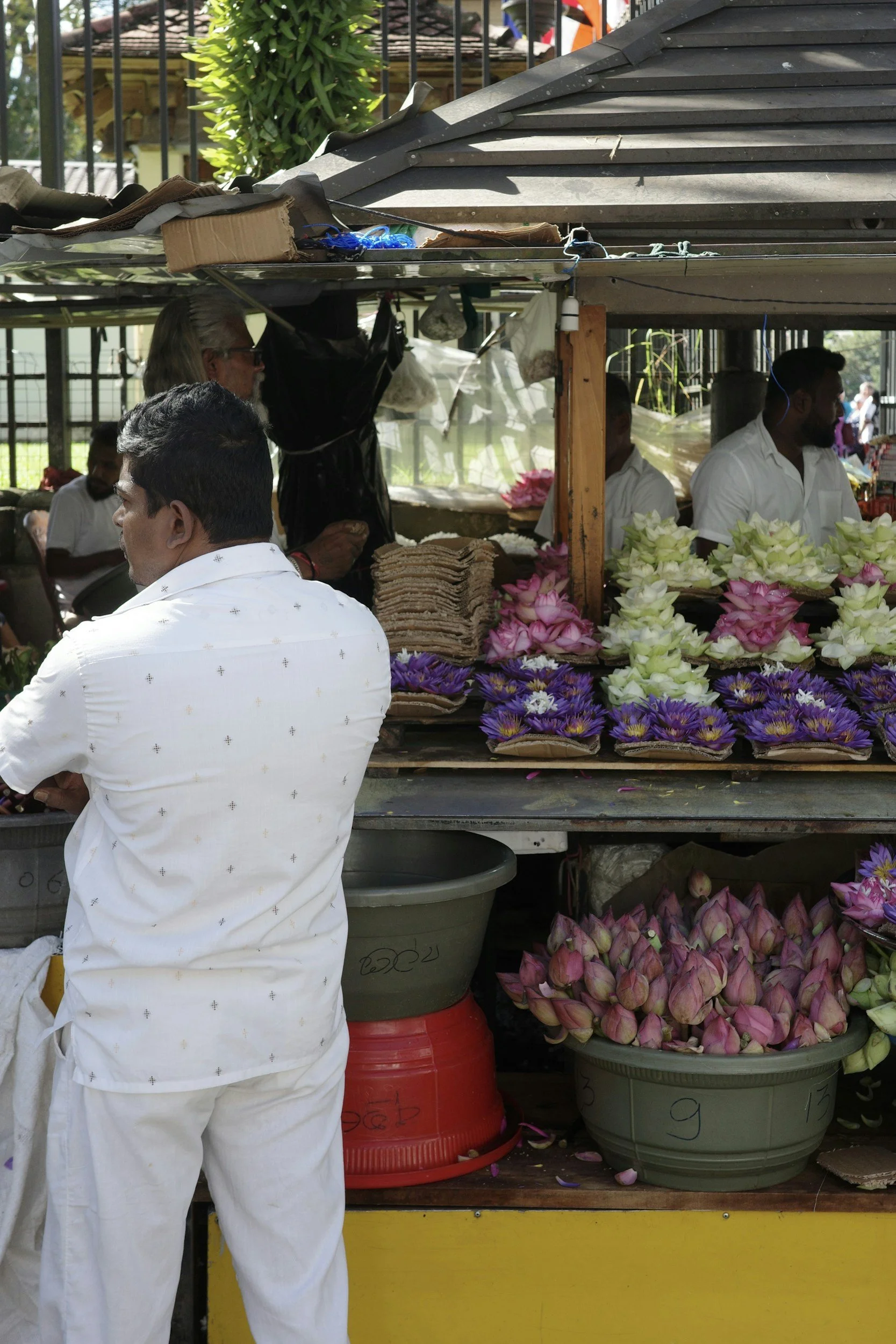
Going to the temple is such a nicer experience when coming with offerings. You do not have to pile up gold at the shrine, but offerings of lotus flowers, incense, and coconut oil are very appreciated. Vendors sell offerings all day long on the outskirts of the temples for a very low price.
If you do not know what to do, observe the locals or follow your guide. People in the temple will also be very willing to show you how to do it. Here is how I present offerings:
Lotus flower: upon facing the statue of Lord Buddha, I bow once. Then I gently open the flower bud and place it upon the shrine. I join my hands in prayer, bow, and retreat.
Incense: light the incense from any flame, shake it to extinguish the flame, and press it into the incense pots. They cannot be missed, as a lot of smoke comes from them.
Oil lamp: pour coconut oil into empty lamps and dip both sides of the wick. Bring a lit lamp to light it up. Once the bottle is empty, bring it back to the vendor.
Turn around and tuck your feet under
One of the main rules in the temple is to never turn your back on the Buddha, which might tap into your ability for awareness. Some temples have hundreds of statues of the Buddha in diverse positions. In one place, you may have statues before you, behind you, to your sides, and you’d have to do a 360 endlessly to never fully turn your back on one.
When retreating from a statue, take a few steps backwards and then turn around. If you have several statues around you, mind the biggest one as a priority. If unsure, watch how the locals do it.
If you wish to sit on the ground before a statue for a moment of calm or meditation, feel free to do so. However, feet may never face the Buddha. Either sit cross-legged or with your feet tucked under your legs.
Flash off
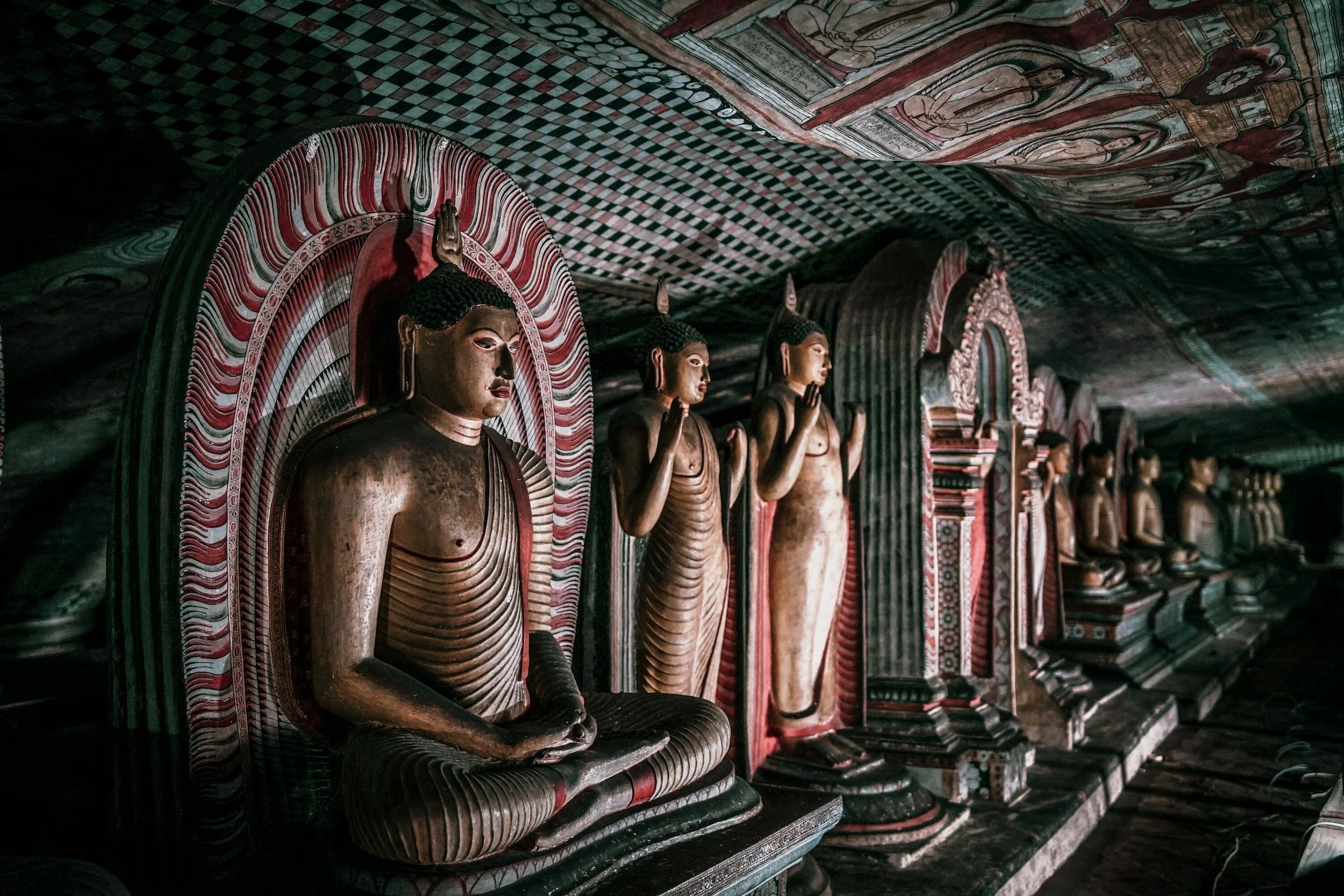
Pictures are not always allowed in temples. You cannot take selfies with the Buddha, as it is considered highly disrespectful.
Some of the indoor temples were erected hundreds, if not thousands, of years ago and painted around the same time. Frescoes older than the City of London, in some cases. These paintings are in indoor temples, sheltered from the light and sometimes in caves or underground. Therefore, do not put the flash on if you wish to take pictures.
Ficus religiosa
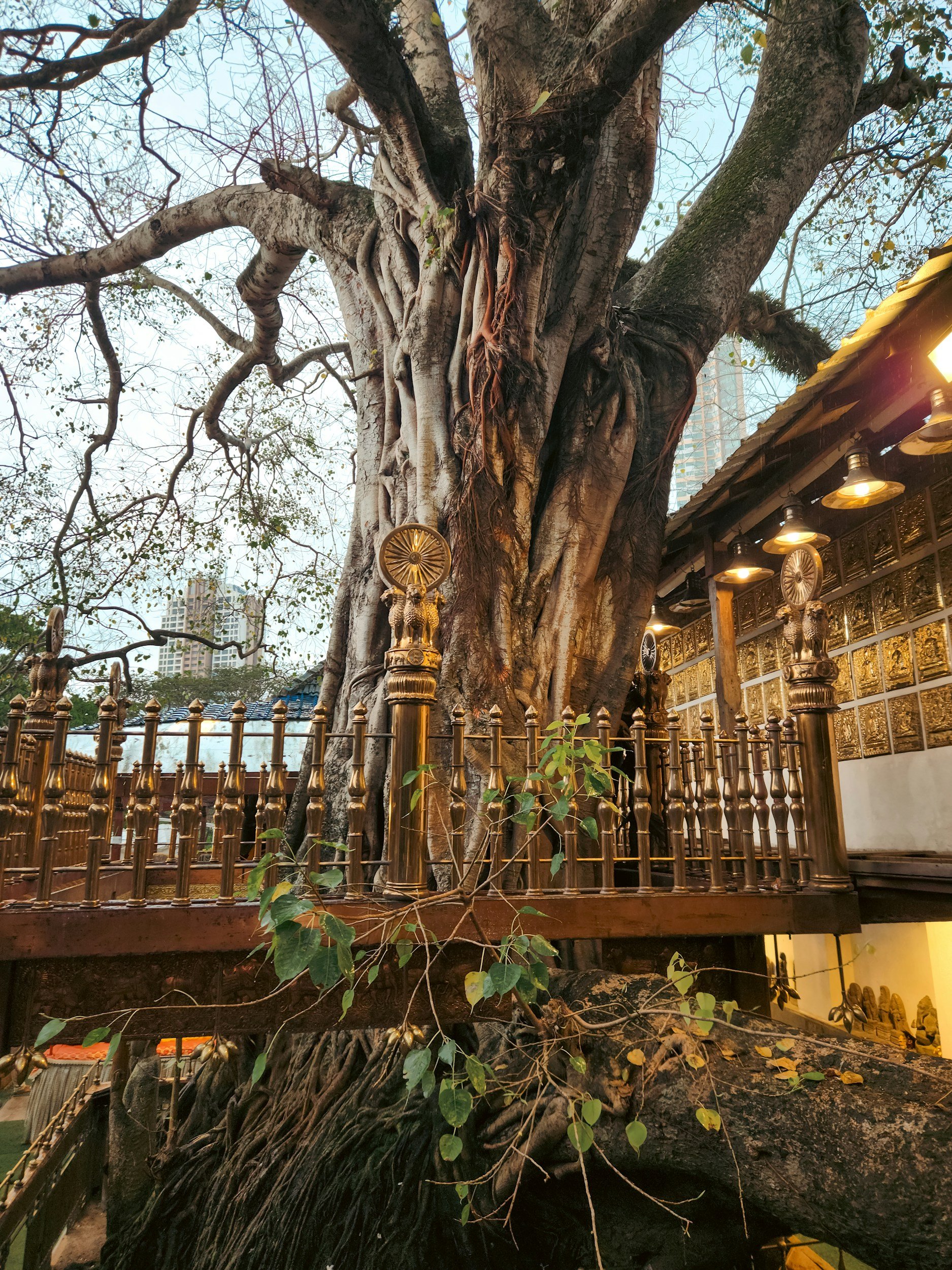
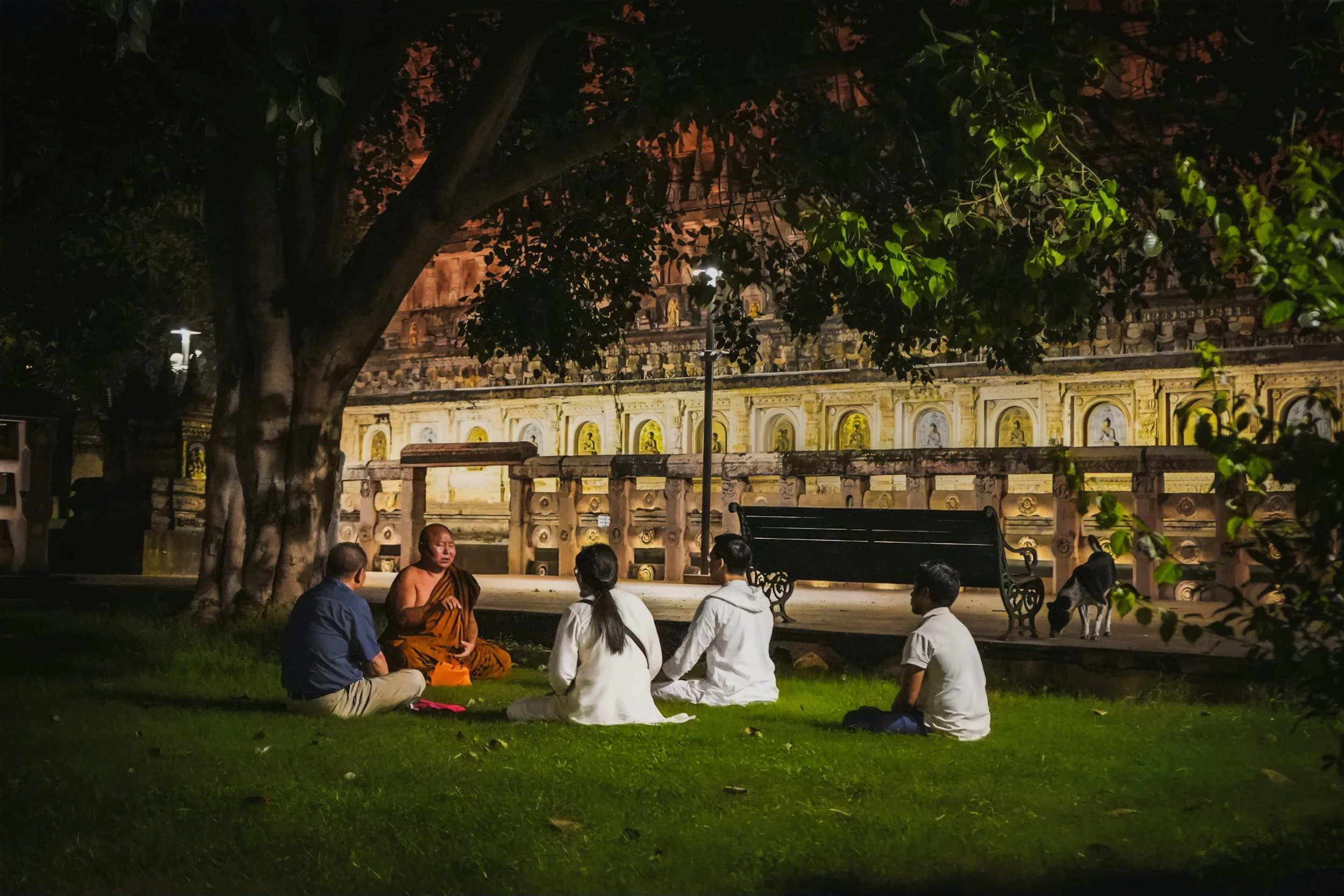
Sri Lankan Buddhists worship the Ficus religiosa, a sacred fig tree or Bodhi tree.
The oldest Bodhi tree is located in Anuradhapura and is more than 2,300 years old. It stemmed from the sapling cut from the original Bodhi tree under which the Buddha became enlightened after a seven-day meditation and where he reached Nirvana. That sapling was brought to Sri Lanka from India by Sangamitta, the daughter of King Ashoka.
It is a revered tree. Buddhists make a pilgrimage to the tree, and most Sri Lankan Buddhists go to water and worship the tree. The Sri Lankan government spends a great deal of money to preserve the tree, as it is a pillar of their society. When I asked my husband what would happen if the tree were to fall ill or die as nature does, his answer was: “It would be a great disaster. It would be a national catastrophe. There would be national mourning, great sadness, and then the people would turn against the government for negligence and for failing to look after the tree, potentially leading to chaos and civil war.” So really, it is very important.
Fear not, though, for the tree has been undergoing great care, and researchers from around the world have come to study it and help its longevity. Saplings of the tree have been prepared for future generations too.
Each Buddhist temple in Sri Lanka has at least one or more Bodhi trees. Worshippers can choose to come and water the tree. Water and special receptacles are available, and the watering has to be done all around the tree roots in a clockwise turn.
Monks and Nuns (Bhikkhu and Bhikkhuni)
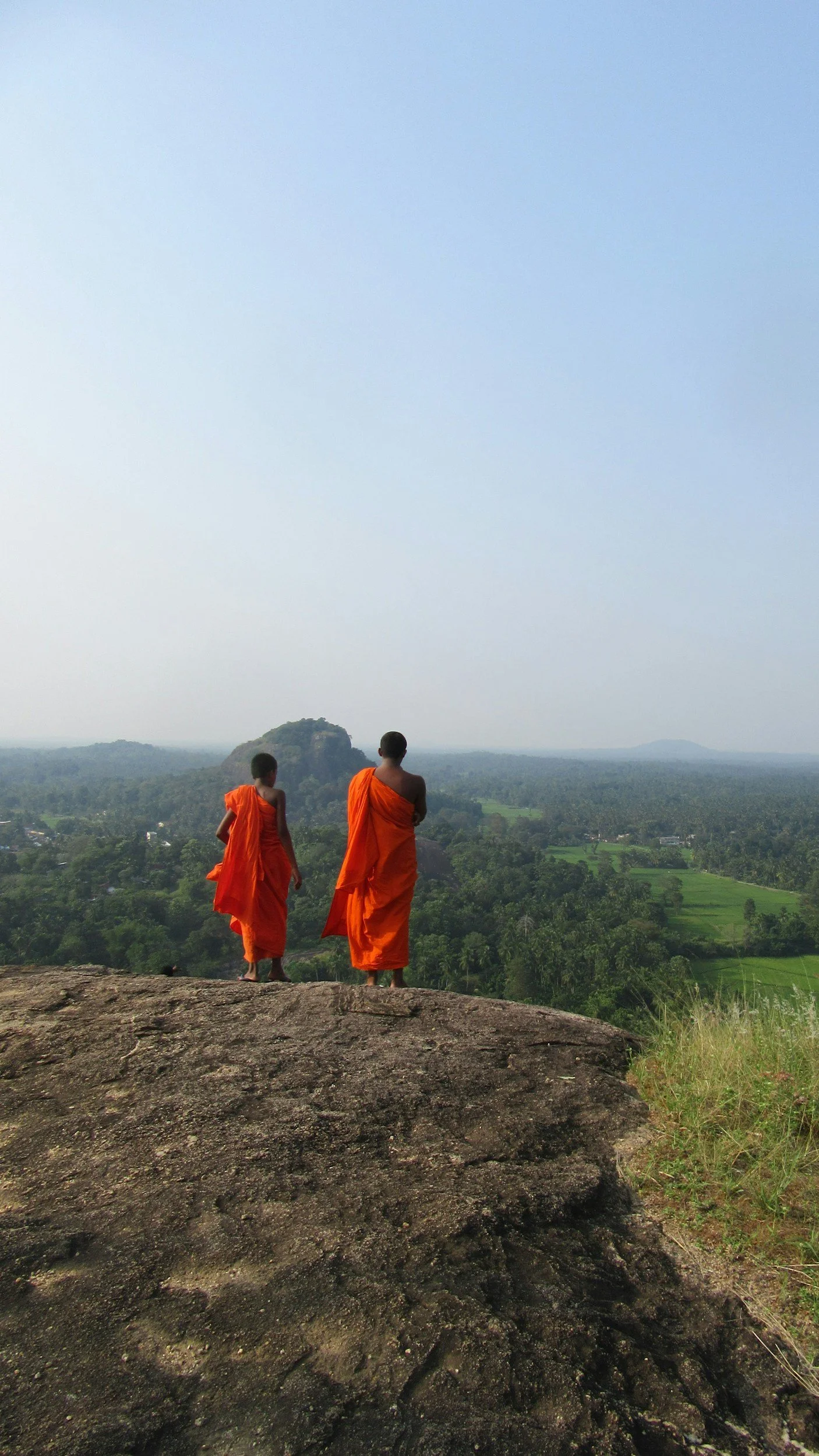
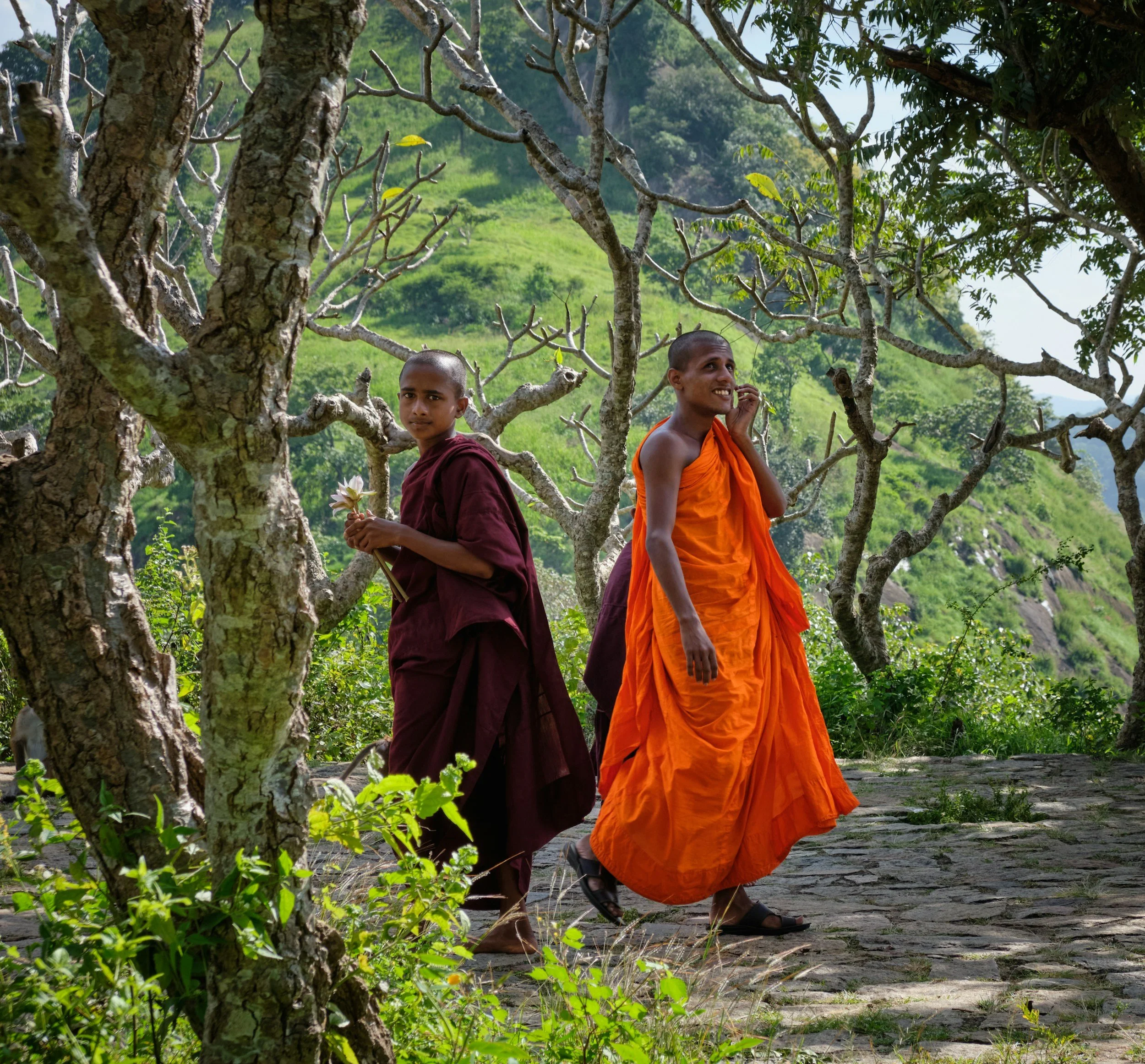
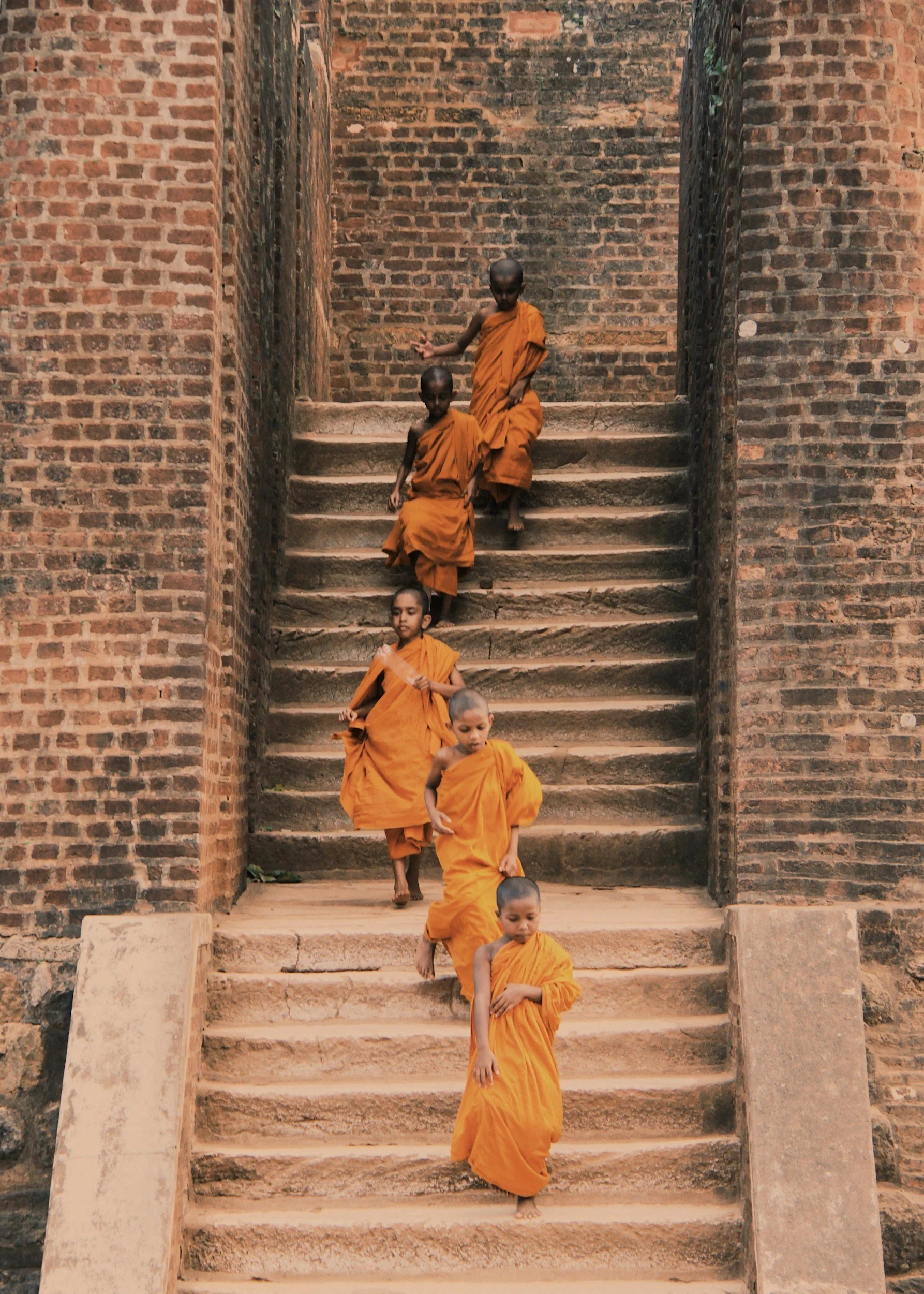
Recognisable by their shaved heads, monks live at the temple. Some monks choose to live in isolation to focus on meditation in the forest or caves. They mainly wear orange, ochre, red, or yellow robes, depending on their monastic order.
Any man can become a monk at any age, including childhood. If a child wants to become a monk, they would need to relinquish their relationship with their family.
A monk’s day in the life includes: morning chanting, cleaning the temple, study, meditation, receiving or eating alms, teaching, meeting worshippers, evening chanting, and religious services.
In stricter monasteries, monks avoid handling money, avoid eating after midday, keep possessions minimal, meditate for long hours, and maintain careful boundaries with people, especially women. Monks cannot have any physical contact with women. Therefore, if you get near a monk as a woman, you should be mindful not to touch him. The same goes for nuns and men. There is very little information on Buddhist nuns, and I have yet to go to and meet with them. I will visit nuns on my next trip to Sri Lanka with my mother-in-law.
Community
Going to the temple is all about community. It is very common to see families going there together. Parents will bring their children and educate them on the practices and how to behave at the temple. It is also a place to see friends, neighbours, and get the news of the town. Some days, there will also be a distribution of food from offerings made to Hindu gods, such as Vishnu and Lakshmi.
Sri Lankan temples are not museums or tourist attractions dressed up for visitors. They are living places, filled with families, monks, offerings, incense, flowers, prayers, and centuries of habits passed from one generation to the next.
As a foreigner, it can feel intimidating at first. There are rules you may not know, gestures you may not understand, and moments where you might worry about doing the wrong thing. But I have found that Sri Lankan people are usually very kind and patient when they see you are trying to be respectful.
So go slowly. Cover your shoulders, take your shoes off, keep your feet tucked away, watch the locals, and do not be afraid to ask. Bring flowers if you can. Light an oil lamp. Sit quietly for a moment. Enter, barefoot, with respect and curiosity and you will leave with a little more understanding of Sri Lanka, its people, and the quiet devotion that lives at the heart of the island.
