The pearl of the Indian Ocean is known for its beaches, beautiful nature and kind-hearted people. Its cuisine reflects their love for the country, their ressourcefulness in using locally grown produce and a surprising blend of different cultures.
The first dish I ate in Sri Lanka was daal: a yellow-coloured, spicy lentil stew. Looking back, I'm glad it was this dish I started my discovery of Sri Lankan cuisine with. It was not as much of a shock as I expected.
The next morning, I was given sliced apples with butter and sea salt. After that, I quickly learnt that my culinary journey was going to be far more of an education than I had hoped, and that I would not be passing the final tests with flying colours as I had assumed.
A spicy relationship
Sri Lankan cuisine relies heavily on spices. Most of its dishes contain one or several types of spices: cinnamon, chilli powder, turmeric, mustard seeds… They all form the basis of the national dish: rice and curry. A curry cannot be made without spices.
Tourists unused to eating spicy food will find Sri Lankan cuisine very spicy. No matter where you have eaten Sri Lankan food before, the spice level will be nothing compared to that of a Sri Lankan curry.
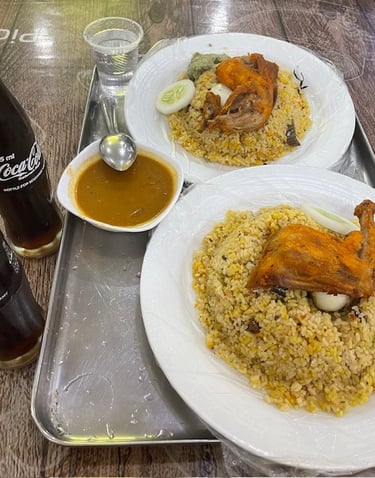
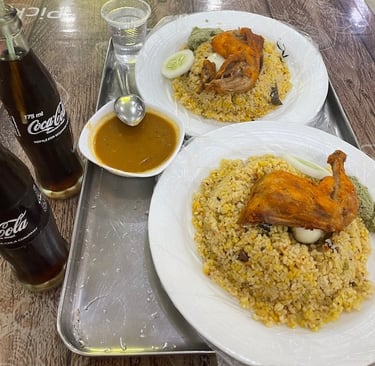
If you are brave enough to try, then I recommend you go to a hotel* and try a rice and curry buffet. Generally, the dish contains a generous portion of rice, a main meat curry (usually chicken or fish), and several vegetable curries. It is often accompanied by papad and a boiled egg and wrapped in banana leaves.
My favourite rice and curry is brown rice, chicken curry with potatoes, mango and brinjal (aubergine) curries. Yes, you read that right—fruits are very often eaten in curries too.
Oh, carbs are accounted for
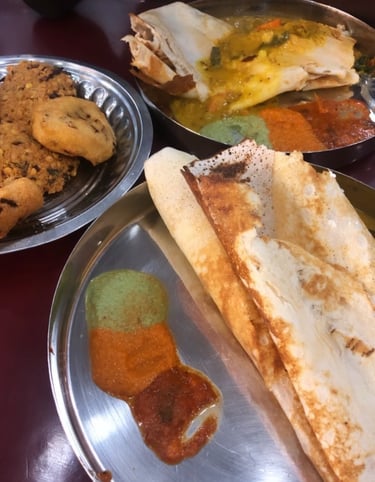
Sri Lanka has a strong relationship with South India. Roughly 20% of the population are Tamil Hindus, and this has a great influence on the cuisine. Dosa, vada, idli, and papad are all present in Tamil restaurants, mainly in Colombo, along the western coast, and in Jaffna in the north.
Rotis made from desiccated coconut are also a staple in Sri Lankan households and are eaten with anything, at any time of the day. Bread is also very popular if you feel peckish.
Every Sri Lankan town, village, or city gets a visit from the tuk-tuk bread seller. As the name suggests, it is a tuk-tuk selling bread, rolls, and other sweet and savoury pastries. A bit like an ice cream truck, this bakery on wheels plays music to let people know it is coming (most tuk-tuk bread sellers play Für Elise by Beethoven, which is known in the country as the tuk-tuk bread song).
Coconut is king
Coconut forms the basis of Sri Lankan cuisine. The country is covered with coconut trees. Many Sri Lankan households have a tree in the backyard and therefore their own supply, which helps keep prices relatively stable.
There are two types of coconuts: the regular coconut, which has a green husk, and the king coconut, which has an orange husk and is native to the island. It is said that king coconut contains more nutrients than regular coconut, is slightly sweeter, and is preferred for drinking, whereas green coconut is more likely used for cooking.
Sri Lankans cook with coconut oil, coconut milk, and incorporate coconut into many of their dishes. If you are not used to eating that much coconut daily, I would advise you to be mindful of your intake, as the fruit is high in fat and sugar. If you are allergic**, it is always best to ask if coconut was used in the preparation of a meal. Hotels (accommodation) will usually cater to this requirement.
A sweet tooth’s paradise
Sri Lanka is well known for its sweets, which are mostly eaten during important celebrations such as Sri Lankan New Year or Vesak (the birth of the Buddha). They are often fried, made with nuts, coconut, and high in sugar.
One such sweet I tried was made with peppercorn:unexpected, but surprisingly enjoyable.
To not drink tea is to not live fully
Tea is the most widely consumed beverage in Sri Lanka. Tea plants were introduced by the British in the 19th century. Tea is drunk in different ways, and its preparation often falls to the oldest woman in the family.
The tea commonly drunk in Sri Lankan households is milk tea: Ceylon tea mixed with powdered milk and enough sugar to make your teeth grind. In tea shops, milk powder and sugar are often replaced by condensed milk. My mother-in-law likes to add some Nestomalt, a powder made of malted barley and milk.
Another way to drink Ceylon tea is freshly brewed, with some sugar and freshly crushed ginger. Sri Lanka also has a wide variety of herbal teas, in line with Ayurvedic traditions. My favourite is bael tea (belimal), made with dried flowers of the bael tree. It is drunk with jaggery, a solid form of coconut sugar. You bite a piece of the sugar and then take a sip of the tea.
Nature is a very generous giver
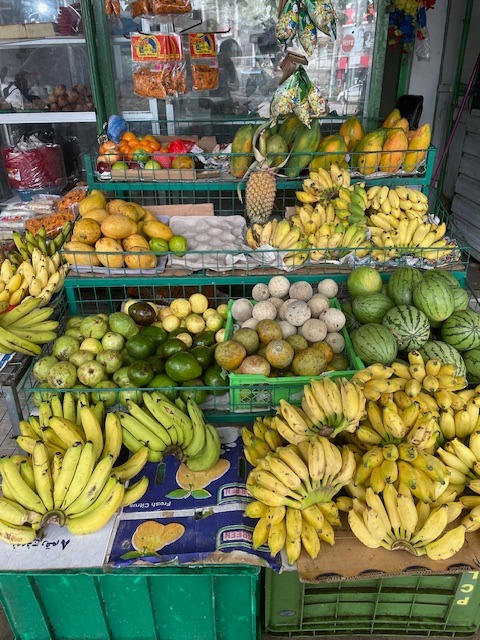
Sri Lankans make the most of what their surroundings have to offer. A lush, buoyant environment provides an abundance of fresh fruits and vegetables, often shared within communities.
In many places, you only need to take a few steps to find fruits and vegetables growing freely. This abundance is reflected in their dishes and is highly dependent on the seasons (dry or monsoon), as well as changing weather patterns.
The first time I visited Sri Lanka, I was surprised by how much food was available in nature. A lot of it goes unused or is eaten by wildlife (mostly bats). I stepped outside with a basket and collected mangoes, breadfruit, jackfruit, rose apples, limes, papayas, cashew fruits (the nut is inside the fruit), edible flowers, bananas, guavas, manioc, curry leaves, and passion fruit.
Unless it is on private property, I recommend picking some and enjoying them—many will fall from the trees once ripe and remain untouched.
If you are vegetarian or vegan, this is the place for you
Sri Lankan cuisine is very vegetarian and vegan-friendly. Most dishes are made with coconut or non-dairy milk.
After the pandemic, the price of milk powder and condensed milk was too high making them luxury items for many households. They were even brought as gifts when visiting someone. Prices have since stabilised, but milk powder is still mostly used in tea only.
Many Sri Lankans do not eat beef or pork due to religious beliefs. Chicken, fish, and eggs are common protein sources but can easily be replaced by a wide variety of protein-packed vegetables and pulses. Soy meat is also an excellent and affordable substitute and is widely available.
Keep in mind that many Sri Lankans visit temples regularly and may follow vegetarian diets on those days.
Trust me, you will keep coming back for seconds or thirds. Sri Lankan food is layered, bold, spicy and reflects the love that the people have for the country but also the respect and understanding that nature is a finite resource that we should treat with care. This, of course, was just an introduction. Your tastebuds will not see the rest coming.
*In Sri Lanka, a hotel refers to an affordable restaurant that sells baked goods and rice and curry. Not to be confused with the hotel to sleep.
**If you wish to ask whether a dish contains coconut and ensure that they understand what you ask, the Sinhala word for coconut is "pol".
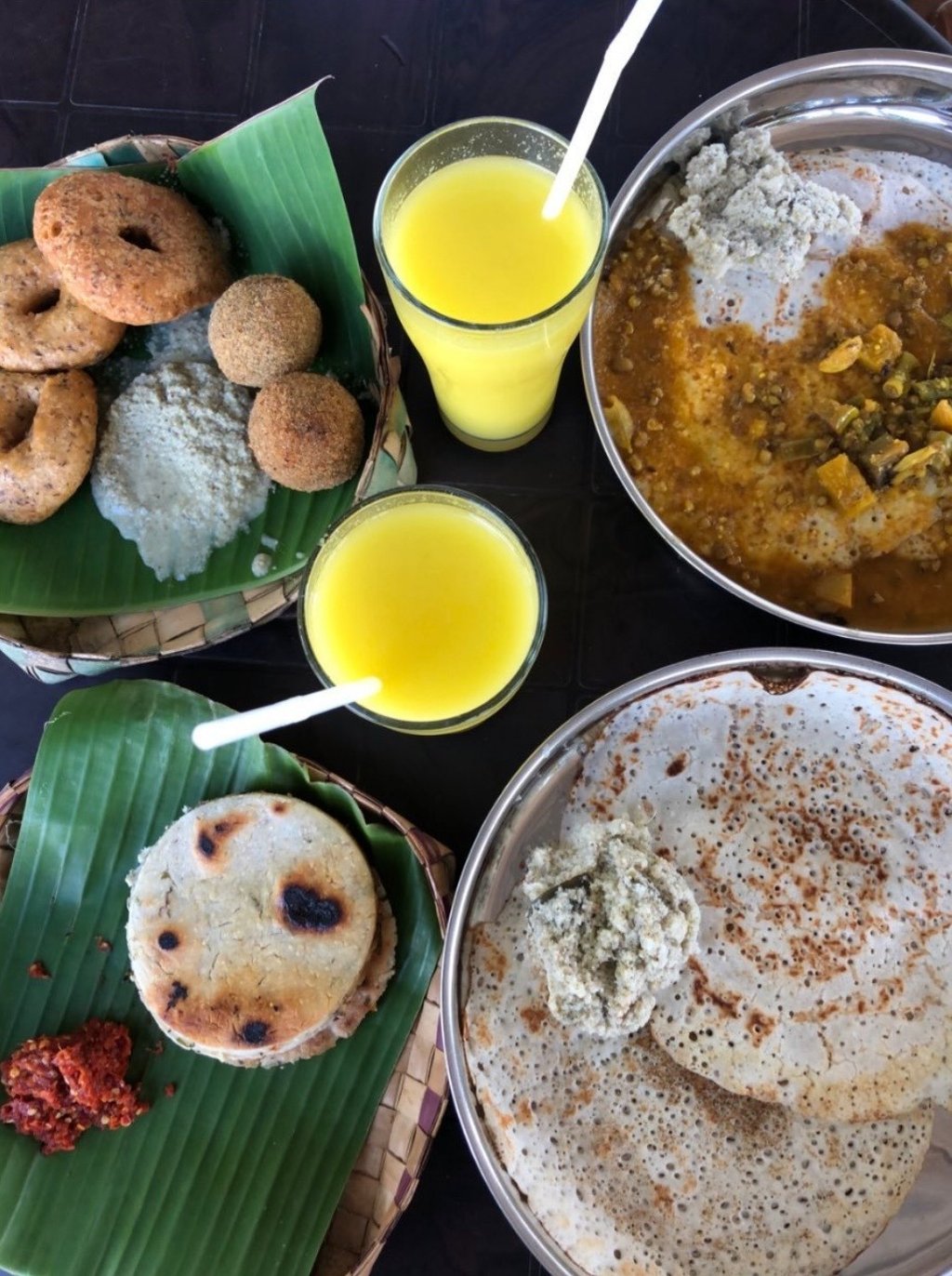
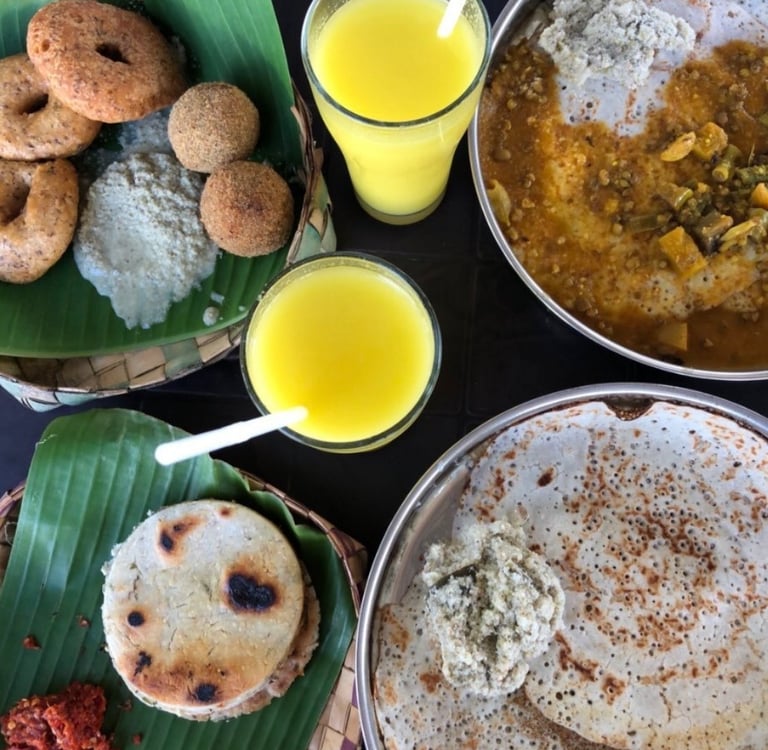
A typical Sri Lankan breakfast
Local fruits at a market stall


South Indian dosa and vada (left) Rice and chicken (right)