Travelogue: The Floating Mountains of China are a way to Heaven.
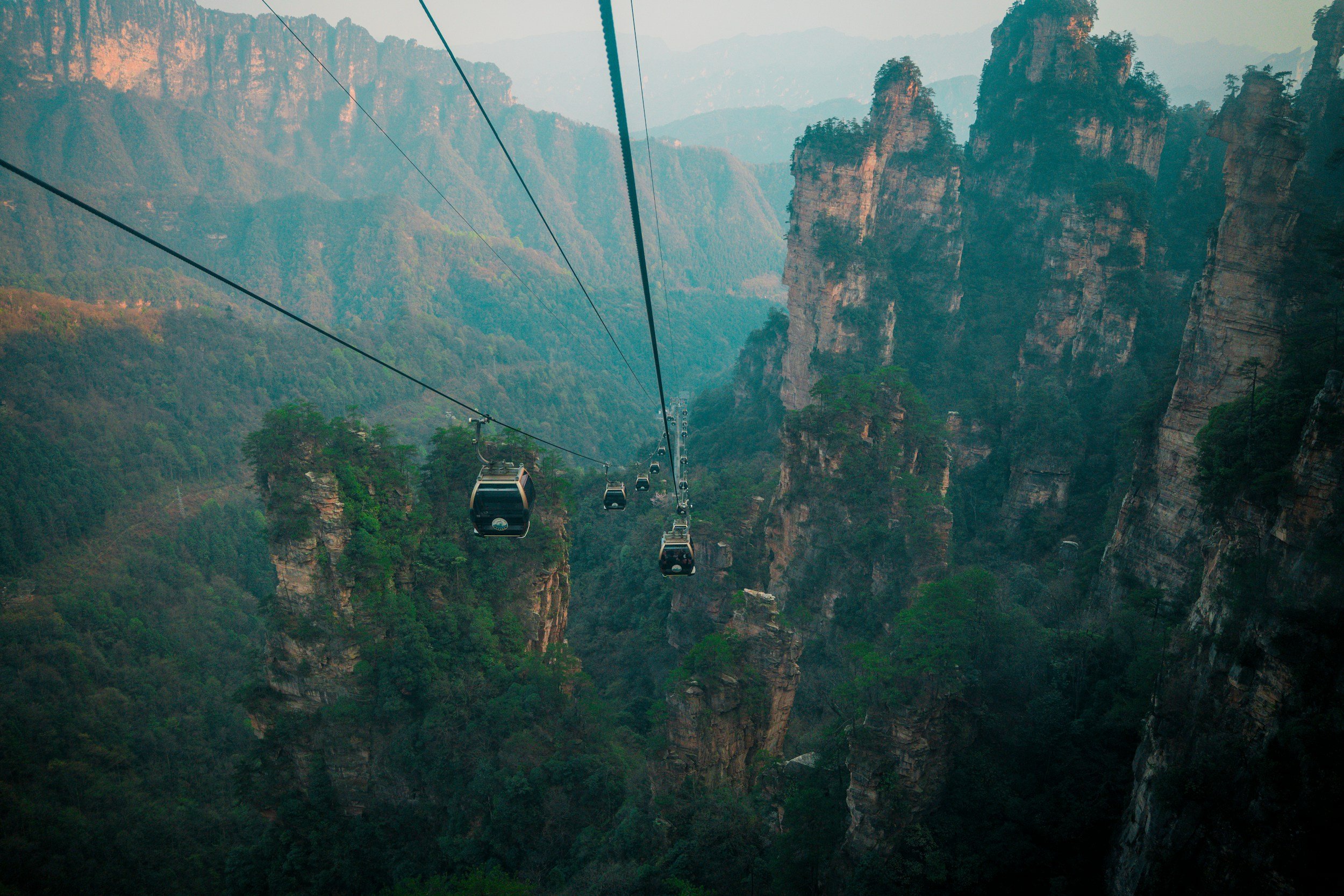
Zhangjiajie Cableway
The first thing to understand about the floating mountains of China is that they do not actually float. They stand.
They rise from the forests of Zhangjiajie National Park in Hunan Province, tall and narrow, like stone towers left behind by another world. When the mist moves through the valleys, the lower parts disappear and the peaks seem to hang in the air. This is where the name “floating mountains” comes from.
Many people know Zhangjiajie because of Avatar. The landscape is often linked to the floating mountains of Pandora, and tourism has fully embraced that connection. But Zhangjiajie is not impressive because it looks like a film. It is impressive because it looks almost impossible in real life.
The area is part of Wulingyuan, a UNESCO-listed scenic region filled with sandstone pillars, ravines, caves, streams, forests, and natural bridges. Some of the pillars rise more than 200 metres, with trees growing from their tops and mist collecting between them. From certain viewpoints, the landscape does not look like normal mountains. It looks like the earth has been cut into vertical pieces.
That morning, we made our way to the National Forest Park at 5:15am. A breakfast of tea and youtiao, Chinese fried dough sticks and a popular breakfast item in China, was all we needed before our early departure. It was essential to arrive before the massive influx of tourists later in the day.
Our taxi dropped us at the western gate, where a minivan took us to the Yangjiajie cableway. There is no other way to get up to the mountains and the scenic route, really. However, the western gate is not as popular a choice of entry to the park itself, as many tourists prefer going up the Bailing Elevator.
After what was the most scenic cableway journey, we finally arrived up in the mountains to... nothing. A square welcomed us. The plan for the day was that there was no plan at all. We knew it would be a hot and sunny day, that the tourists would come eventually in large numbers, and at 7am, we stood there not knowing where to go. We ended up following a bunch of British tourists who seemed to have been inspired by the Avatar movies to come up here. But where they turned left at some intersection, we decided to carry on to “One Step to Heaven”, which, on the map provided by the different though scarce signs on the path, did not indicate what we would find there. And so, surrounded by the forest and the mountains, pushing along the narrow and winding path beside a very deep ravine, we trekked with the chanting of birds, cicadas, and crickets to the top of the pillar mountain we stood on.
Here is the thing that absolutely enchanted me in this place: pine trees. They are a window into so many of my summer memories. The smell is unmistakable and intoxicating. Their needles form a cushioning layer for sore feet, softening our sounds to make space for nature’s. All around us were Huangshan pine trees doing these jobs to perfection. The place was covered in this species, which is endemic to eastern China.
After about 45 minutes of walking uphill and along flat paths, a small clearing surrounded by trees appeared. To the left, going up a stone wall, were two ladders made of steel. One was for the way up and the other for the way down. They were both set at a very steep angle, and as I climbed, I could feel gravity pulling me down. Thankfully, metal hoops surrounded us in case of a fall. After pulling ourselves up, we finally were on the mountaintop.
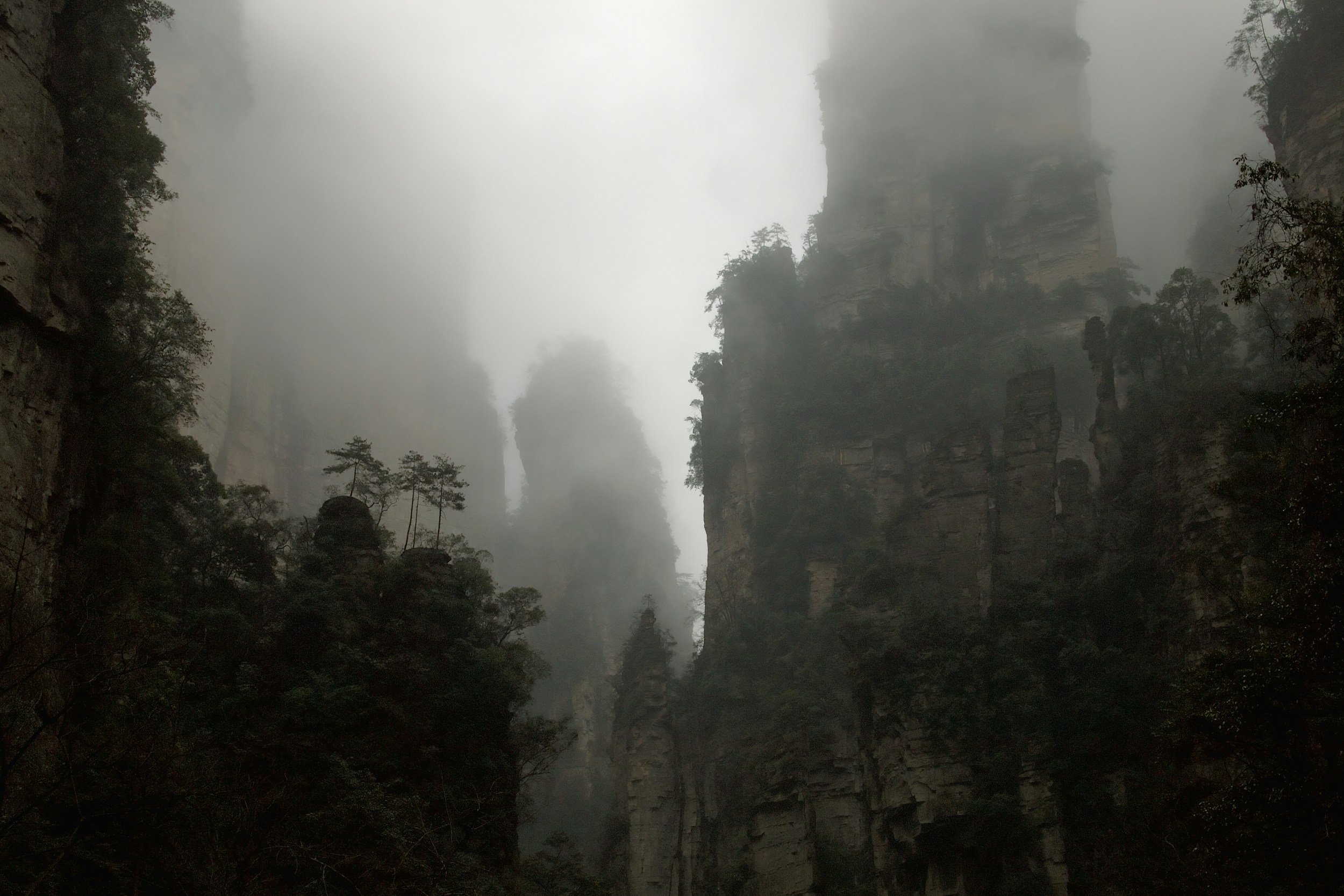
Very high above the mist was heaven, and we reached it. No one else was with us. We felt like the owners of a secret place. All around us, looking down, were the floating mountains of Zhangjiajie. Pillars of quartz-sandstone, ornamented by pine trees, spreading endlessly across the horizon. Walls of them were formed through the millions of years it took to achieve such a breathtaking landscape. Many canyons sprawled below, and you could not see the bottom of them. We were halfway between mountains and sky.
All around us was simply air. We were quite literally on top of the world. Separating us from a deadly fall were only wide wooden barriers with red ribbons tied to them. The place was covered in red silk talismans, hung on the wooden beams and pine tree branches, with wishes from the people who had climbed up to the heavens. The closer one is to the sky, the more chance their prayers have of being heard.
For a while, it was only us there, staring at the horizon. It is no mere coincidence that my homepage shows Zhangjiajie. This place is one of the most incredible places I have ever visited in all my time travelling around the world.
We climbed down the other ladder, fighting against Earth’s pull. Then, during the three hours it took to go down the mountain to the western gate, on a forgotten path along a small river at the bottom of the canyon, we saw no one else going down that route, which was great because we wanted to avoid the crowd.
Looking back, I think this is what made Zhangjiajie so unforgettable to me. It was not only the famous view, or the Avatar connection, or even the feeling of standing above the mist. It was the way we reached it: early in the morning, with no real plan, walking through the forest, following quiet paths, and finding a place where no one else was around.
Zhangjiajie is a very popular destination, and yes, there are crowds, cableways, signs, platforms, and tour groups. But if you start early enough, take a different route, and allow yourself to get a little lost, the place still gives you moments that feel completely your own.
The floating mountains may not actually float, but from up there, with the valleys hidden below and the pillars stretching endlessly into the distance, it is easy to understand why people gave them that name.
